IPTV vs Satellite TV: Which Is Better in 2026?
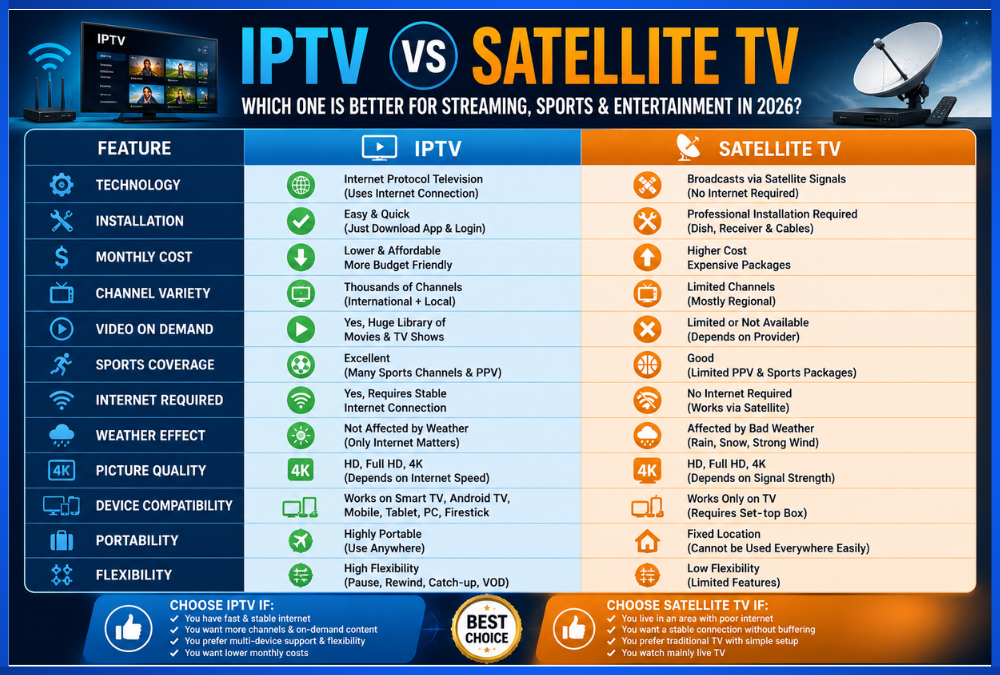
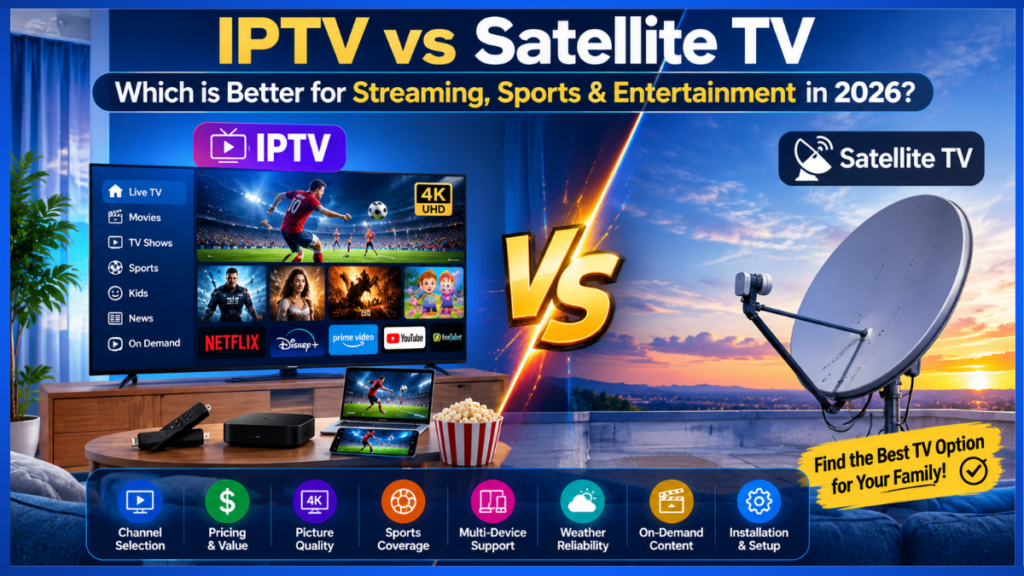
IPTV vs Satellite TV: Which Is Better for Streaming, Sports & Entertainment in 2026?
Television has changed significantly in recent years.
Traditional satellite TV remains a popular way to watch live channels (like those in our IPTV channels list), sports, news, and entertainment, while IPTV has become an increasingly flexible alternative for viewers who prefer internet-based streaming.
But which option is better in 2026?
The answer depends on several factors, including your internet connection, location, viewing habits, preferred sports and entertainment content, installation requirements, and the devices you want to use.
IPTV can offer greater flexibility and easier access across compatible devices, while satellite TV can remain attractive for households that want television without relying on broadband internet.
In this guide, we compare IPTV vs satellite TV across the factors that matter most, including streaming quality, sports, entertainment, reliability, installation, cost, portability, and device compatibility.
Only use IPTV services and content that you are legally authorized to access, such as Smartiflix, your choice for Premium IPTV in USA, Europe & Canada.
IPTV vs Satellite TV: Quick Answer
Neither IPTV nor satellite TV is universally better for everyone.
IPTV may be the better choice if you:
- Have a stable broadband connection. (Check What Internet Speed Do You Need for IPTV?)
- Want to watch on multiple compatible devices.
- Prefer app-based viewing.
- Want greater portability.
- Use Smart TVs, Android TV, Fire TV, smartphones, tablets, or computers (see our installation guides).
- Prefer internet-based on-demand features.
- Do not want to install a satellite dish.
Satellite TV may be the better choice if you:
- Have limited or unreliable broadband.
- Live in a location with good satellite reception.
- Want television that operates independently of your home internet connection.
- Prefer a traditional TV setup.
- Primarily watch through a dedicated television receiver.
The best option depends on your priorities rather than simply choosing the newer technology.
What Is IPTV?
IPTV stands for Internet Protocol Television. For top service, see Smartiflix IPTV service.
Instead of receiving television through a satellite dish, IPTV delivers video content through an internet connection.
Depending on the service, IPTV can provide access to live television, on-demand programming, electronic program guides, and other interactive features through compatible applications and devices.
A typical IPTV setup may include:
- Internet connection
- Compatible Smart TV or streaming device
- IPTV application/player
- Authorized IPTV account or service (like our available plans)
One of IPTV's biggest advantages is flexibility.
Because content is delivered through the internet, compatible services can potentially be accessed across different supported devices and locations.
What Is Satellite TV?
Satellite TV delivers television signals from satellites orbiting Earth to a satellite dish installed at the viewer's location.
A typical setup includes:
- Satellite dish
- LNB
- Satellite receiver or decoder
- Television
- Satellite subscription or authorized broadcast service
Satellite TV does not require the same type of broadband connection used by IPTV.
This can make it particularly useful in locations where fast internet is unavailable.
However, satellite TV generally requires physical installation and a suitable line of sight for the dish.
How IPTV and Satellite TV Work
 Comparison of internet-based IPTV and satellite television delivery
The fundamental difference is how the television signal reaches your home.
IPTV
The content travels through an internet connection to your device.
The general path is:
Content source → Internet → Router → IPTV application → TV/device
Satellite TV
The signal travels from a broadcast facility to a satellite and then to your dish.
The general path is:
Broadcast source → Satellite → Dish → Receiver → TV
This difference affects reliability, installation, portability, and the types of problems users may encounter.
IPTV vs Satellite TV: Comparison Table
| Feature | IPTV | Satellite TV |
|---|---|---|
| Delivery method | Internet | Satellite signal |
| Internet required | Yes | No |
| Satellite dish | No | Yes |
| Installation | Usually simple | Usually requires equipment/setup |
| Portability | High | Low |
| Smart TV support | Usually available | Usually through receiver |
| Smartphone/tablet support | Often available | Limited |
| On-demand features | Often strong | Depends on provider |
| Weather sensitivity | Generally unaffected directly by rain | Can be affected by heavy weather |
| Internet outage impact | Yes | Usually no |
| Wi-Fi dependency | Possible | No |
| 4K availability | Depends on service | Depends on provider/channel |
| Multiple-device flexibility | Usually higher | Often more limited |
| Best for remote areas without broadband | No | Yes |
The exact features depend on the provider, service, equipment, and region.
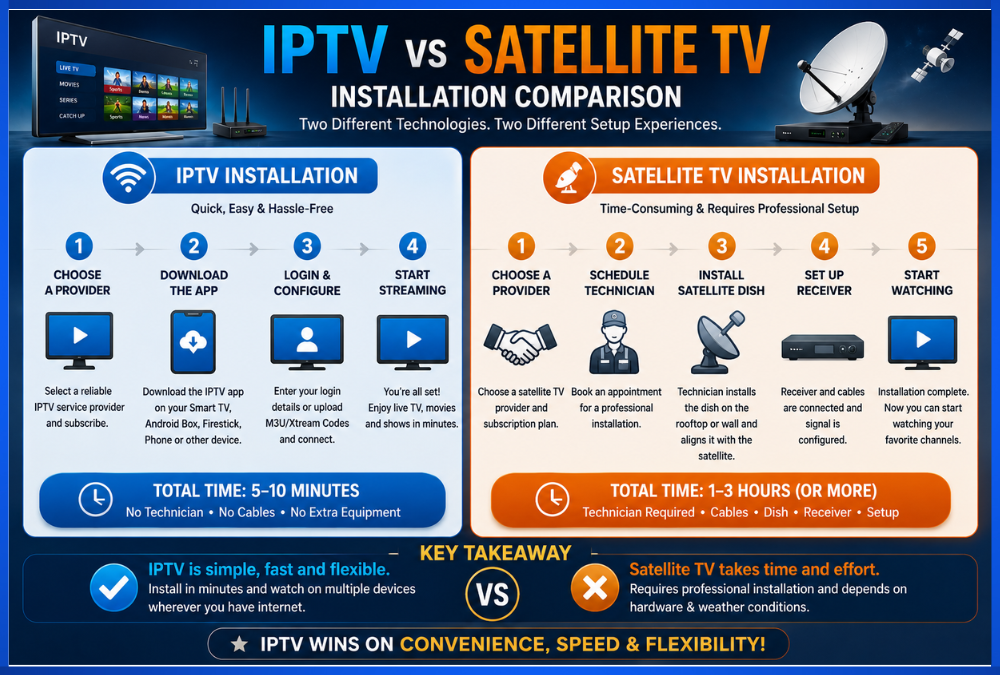
IPTV vs Satellite TV: Installation
 IPTV streaming devices compared with satellite TV equipment
Installation is one of the clearest differences.
IPTV Installation
IPTV generally requires:
- Internet connection
- Compatible device
- IPTV application
- Authorized account or playlist
There is normally no need to install a dish or physically align equipment.
This makes IPTV attractive for renters and users who prefer a simple setup.
Satellite Installation
Satellite TV typically requires:
- Satellite dish
- LNB
- Receiver
- Cable connections
- Dish alignment
- Authorized satellite service
The installation may require more physical work and equipment.
For homeowners who already have a functioning satellite installation, however, this may not be a significant disadvantage.
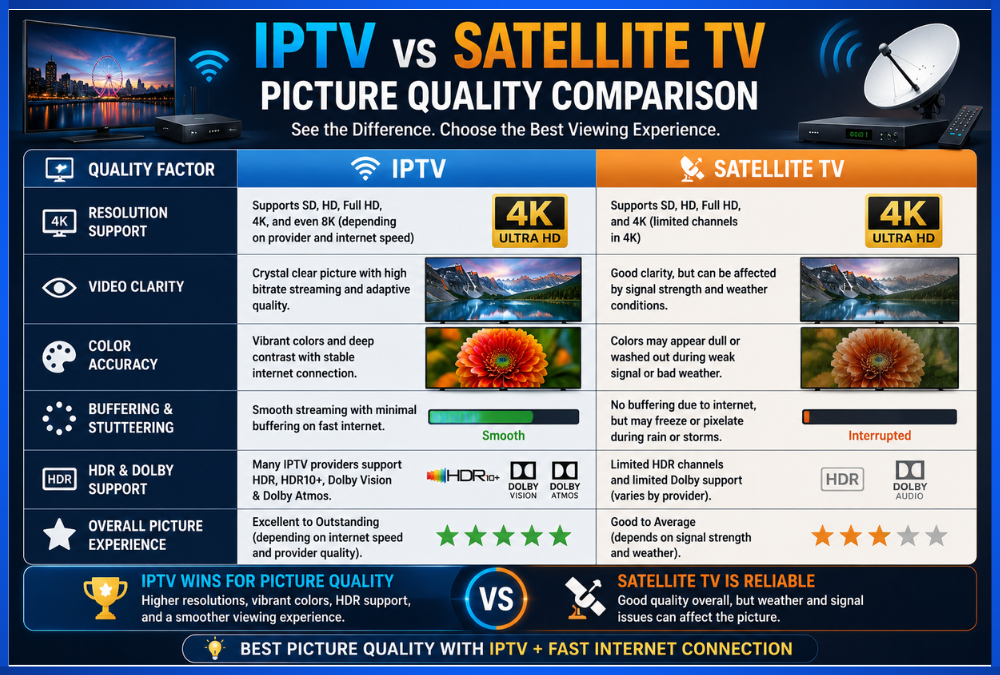
IPTV vs Satellite TV: Picture Quality
 IPTV and satellite TV picture quality comparison
Both technologies can deliver high-quality television.
The actual quality depends on:
- Source quality
- Video bitrate
- Compression
- Broadcast standards
- Device capabilities
- Display resolution
- Network conditions for IPTV
IPTV can support HD, Full HD, and 4K streams when the authorized service provides them and the user's device and connection are capable of handling them.
Satellite services can also provide HD and 4K channels where supported.
Therefore, it is inaccurate to say that one technology always produces better picture quality.
The specific channel and service matter more than the delivery method alone. If you have issues, contact our support.
IPTV vs Satellite TV: Reliability
Reliability is one of the most important factors in this comparison.
IPTV Reliability
IPTV depends on your internet connection.
Problems can occur when there is:
- Slow internet
- Network congestion
- Weak Wi-Fi
- Packet loss
- Router problems
- Internet outages
- Device problems
- Application issues
A strong and stable internet connection can significantly improve IPTV reliability. To learn more about how internet affects your stream, read our guide on What Internet Speed Do You Need for IPTV?.
Satellite Reliability
Satellite television does not depend on your home broadband connection.
This can be a major advantage in locations where internet service is unreliable.
However, satellite reception can be affected by environmental conditions, particularly severe weather.
Heavy rain or storms can temporarily interfere with signal reception.
IPTV vs Satellite TV: Weather
Weather affects the two technologies differently.
IPTV
Normal rain and storms do not directly interfere with the internet delivery of IPTV.
However, severe weather can still cause problems if it affects your electricity supply or local internet infrastructure.
Satellite
Satellite signals can experience reception problems during heavy rain or severe weather conditions.
This phenomenon is commonly known as rain fade.
Therefore:
IPTV depends more on internet conditions, while satellite depends more on satellite signal conditions and weather.
IPTV vs Satellite TV for Sports
 Watching live sports through IPTV and satellite TV
Sports viewers often have different priorities from general TV viewers.
They may care about:
- Live coverage
- Picture quality
- Channel availability
- Delay
- Reliability
- Multiple devices
- Replay and on-demand features
IPTV for Sports
IPTV can be attractive to sports fans because compatible services can provide flexible viewing across supported devices.
Depending on the authorized service and rights in your region, users may have access to:
- Live sports channels
- Sports networks
- Replays
- On-demand content
- Multiple viewing devices
IPTV is particularly convenient for people who want to watch away from their main television.
However, internet quality becomes extremely important during live events.
A weak connection can result in buffering at exactly the wrong moment. For troubleshooting sports buffering, read IPTV Buffering: 15 Causes and How to Fix It in 2026.
Satellite TV for Sports
Satellite remains a strong option for traditional live sports viewing.
It does not depend on home broadband, and dedicated satellite broadcasts can provide a consistent live-TV experience when reception is good.
For households with reliable satellite reception but weak internet, satellite can be the safer option.
Which Is Better for Sports?
There is no universal winner.
Choose IPTV if you prioritize:
- Flexibility
- Multiple devices
- Internet-based viewing
- Portability
- Interactive features
Choose satellite if you prioritize:
- Independence from broadband
- Traditional live-TV viewing
- Consistent satellite reception
- Access in areas with limited internet
Also remember that sports availability is determined by broadcasting rights and your authorized service or subscription.
IPTV vs Satellite TV for Entertainment
Entertainment includes much more than live television.
Modern viewers may want:
- Movies
- TV series
- Catch-up content
- On-demand programming
- International channels
- News
- Documentaries
IPTV platforms can be particularly convenient when on-demand features and multi-device access are important.
Satellite remains strong for traditional channel-based viewing, especially where users prefer a conventional TV experience.
IPTV vs Satellite TV for International Content
International viewers often value access to channels from different regions.
IPTV can be highly flexible because internet-based services can support compatible viewing across locations.
However, channel availability depends on licensing and geographic rights.
Satellite TV can also provide international channels, but availability depends heavily on the satellite, region, dish configuration, and subscription.
Neither technology automatically guarantees access to every international channel.
IPTV vs Satellite TV: Device Compatibility
This is another major difference.
IPTV
Depending on the authorized service and application, IPTV may work on:
- Smart TVs
- Android TV
- Fire TV devices
- Smartphones
- Tablets
- Computers
- Compatible streaming boxes
This makes IPTV attractive to users with multiple screens. For help setting up a device, read How to Set Up IPTV on Android TV in 2026.
Satellite
Satellite TV generally centers around:
- Television
- Satellite receiver
- Optional additional receivers
Some modern satellite services provide companion applications and streaming features, but the traditional satellite setup remains more hardware-focused.
IPTV vs Satellite TV: Portability
Portability is one of IPTV's strongest advantages.
With a compatible device and internet connection, an authorized IPTV service may allow you to access your content in different locations where the service permits it.
Satellite is much less portable because the dish and receiver are physically installed.
Moving the system may require:
- Dish repositioning
- New alignment
- Additional installation
- Compatible signal coverage
If portability is important, IPTV generally has the advantage.
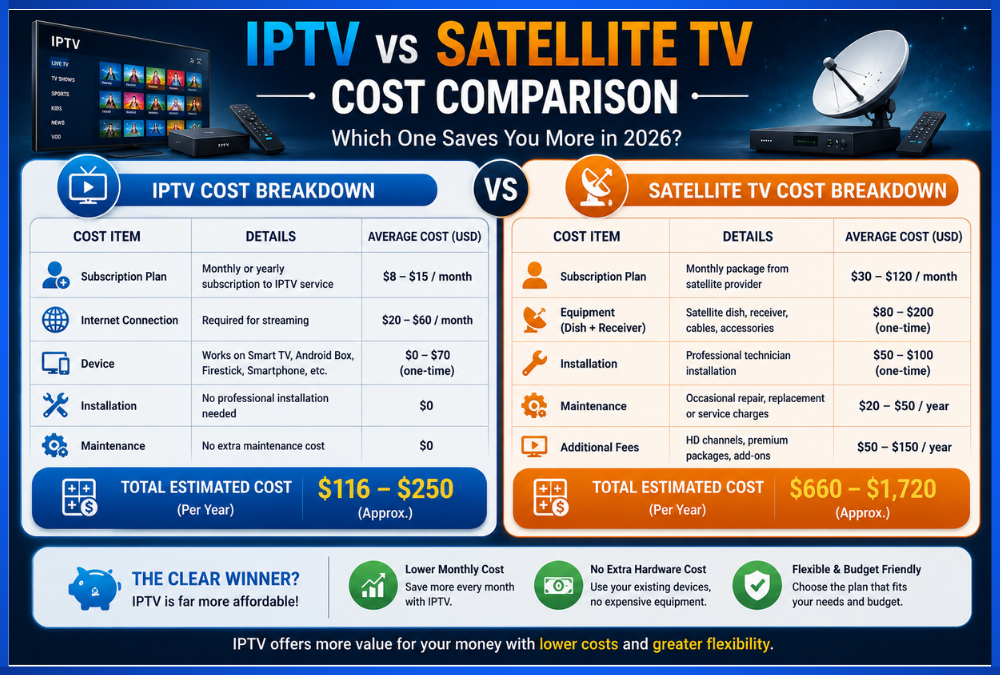
IPTV vs Satellite TV: Cost
Cost varies significantly by country and provider, so avoid judging either technology based only on a single advertised price.
IPTV Costs
An IPTV setup may require:
- Internet subscription
- IPTV service subscription
- Compatible device if necessary
There is generally no satellite dish installation.
Satellite Costs
Satellite may involve:
- Equipment
- Installation
- Receiver
- Subscription
- Optional premium packages
Existing satellite equipment can reduce the initial cost for households that already have a dish installed.
When comparing prices, consider the total cost rather than only the monthly subscription.
IPTV vs Satellite TV: Internet Dependency
This is perhaps the most important deciding factor.
IPTV requires internet access.
Satellite TV generally does not require broadband internet to receive traditional satellite channels.
If you already have reliable high-speed internet, IPTV becomes more practical.
If your internet is slow or unreliable, satellite may provide a more consistent television experience.
IPTV vs Satellite TV: Latency
Latency is particularly relevant for live sports.
Streaming services can introduce additional delay because the video must be encoded, transmitted, buffered, and decoded.
Satellite broadcasts can also have a delay due to signal processing and the satellite transmission path.
The actual delay varies by service and technology.
For most casual viewers, the difference may not matter.
For sports fans who follow live social media updates, however, even a few seconds can be noticeable.
Advantages of IPTV
1. Flexible Device Support
Compatible services can work across multiple types of devices.
2. Simple Installation
No satellite dish is normally required.
3. Portability
Internet-based access can be more convenient when moving between supported locations.
4. On-Demand Features
Many IPTV platforms can integrate live TV with on-demand content.
5. Interactive Features
Features such as EPG, catch-up, and playback controls may be available depending on the service.
6. Easy Updates
Applications and playlists can be updated without physically changing television hardware.
Disadvantages of IPTV
1. Internet Dependency
Without a stable connection, streaming quality can suffer.
2. Buffering
Network congestion and connection problems can cause buffering.
3. Device Compatibility
Older devices may not support certain applications or video formats.
4. Variable Service Quality
The experience depends on the quality and reliability of the authorized service.
Advantages of Satellite TV
1. Independent of Home Broadband
Satellite reception does not depend on your normal internet connection.
2. Strong Traditional Live-TV Experience
Satellite remains well suited to conventional channel-based viewing.
3. Useful in Remote Locations
It can be practical where fast broadband is unavailable.
4. Dedicated Hardware
The receiver and dish provide a dedicated television system.
Disadvantages of Satellite TV
1. Installation Requirements
A dish and receiver are normally required.
2. Weather Sensitivity
Severe weather can affect satellite reception.
3. Limited Portability
The system is tied to the physical installation.
4. Less Flexible Across Devices
Traditional satellite setups are primarily designed around televisions and receivers.
Who Should Choose IPTV?
IPTV may be the better fit if you:
- Have reliable broadband.
- Watch TV on multiple devices. (Check our IPTV options)
- Want portability.
- Prefer app-based viewing.
- Want integrated on-demand features. (Browse Smartiflix platform)
- Do not want a satellite dish.
- Frequently use Smart TVs or streaming devices. (Check supported devices)
Who Should Choose Satellite TV?
Satellite may be the better choice if you:
- Live in an area with limited broadband.
- Have a clear satellite signal.
- Prefer traditional TV.
- Want television independent of internet outages.
- Already own satellite equipment.
- Primarily watch from one fixed location.
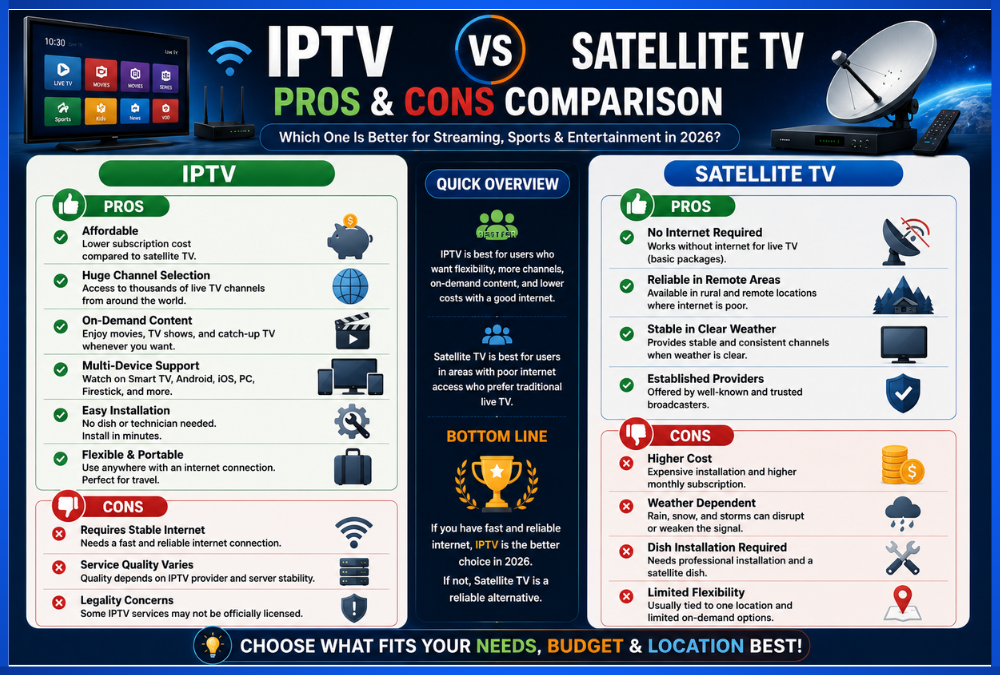
IPTV vs Satellite TV: Which Is Better in 2026?
 IPTV versus satellite TV features and benefits
For many connected households in 2026, IPTV offers a more flexible viewing experience.
Its strongest advantages are device compatibility, portability, simple setup, and integration with internet-based viewing.
However, satellite remains highly relevant.
If your internet connection is unreliable or unavailable, satellite can be a more dependable solution for traditional television.
The most important question is not:
"Which technology is newer?"
It is:
"Which technology fits my home, internet connection, viewing habits, and budget?"
Final Verdict
| If You Prioritize... | Better Choice |
|---|---|
| Multi-device viewing | IPTV |
| Portability | IPTV |
| Simple installation | IPTV |
| On-demand features | IPTV |
| Reliable broadband is available | IPTV |
| No reliable broadband | Satellite |
| Traditional TV setup | Satellite |
| Independence from home internet | Satellite |
| Fixed-location viewing | Satellite |
| Remote-area television | Satellite |
Overall, IPTV is often the more flexible choice for households with reliable internet, while satellite TV remains a strong option for viewers who prioritize independence from broadband or live in areas with limited internet access.
Neither option is perfect for every household.
The right choice depends on your location, internet quality, preferred content, devices, budget, and how you watch television.
Frequently Asked Questions
Conclusion
Both IPTV and satellite TV offer robust ways to stream sports and entertainment in 2026. The key is to match your needs to the right delivery method. If you value flexibility and have reliable broadband, IPTV is a powerful option. If you lack solid internet and want a reliable, traditional setup, satellite TV remains an excellent choice. Make sure to choose authorized services to ensure a stable and consistent viewing experience. For more on troubleshooting streaming problems, check out our guide on IPTV Channels Not Loading: Causes and Fixes or IPTV Not Working: 15 Things to Check First.